Chef Anne makes cranberry-orange quickbread, the perfect holiday gift. This video is part of Holiday Web Videos show hosted by Anne Burrell .
----------------------------------------------------------------------------------------------------------------------------
Ingredients
• 2 cups all-purpose flour, plus extra for loaf pan
• 3/4 cup sugar
• 1/2 cup brown sugar
• 1/2 teaspoon salt
• 1/2 teaspoon baking soda
• 1 stick cold butter, cut into pea size pieces, plus extra for loaf pan
• 1 orange, zested
• 3/4 cup fresh orange juice
• 1 orange, peeled, sections removed and diced
• 1 egg
• 1 cup dried cranberries
• Special Equipment: 9 by 5-inch loaf pan
----------------------------------------------------------------------------------------------------------------------------
Directions
Preheat the oven to 350 degrees F.
In a food processor combine the flour, sugars, salt, baking soda and butter. Pulse, pulse, pulse until the mixture resembles finely grated cheese. Add the orange zest, juice and the egg. Pulse, pulse, pulse until the mixture is just combined. Remove to a bowl and stir in the diced orange and cranberries.
Grease and flour the loaf pan and add the batter. Bake in the preheated oven for 1 hour and 15 minutes. Rotate the pan halfway through the cooking time to insure even cooking.
When done let cool for about 20 minutes and remove from loaf pan. Let cool completely before cutting.
---------------------------------------------------------------------------------------------------------------------------
Healing and Health
Cranberries exhibit a level of tannins, in addition to antioxidants. Tannins have anti-clotting properties, and may help reduce infections in the urinary tract and reduce the amount of plaque-causing bacteria in the mouth, thus being a prophylaxis for gingivitis. Studies have found that cranberries reduce the risk of heart disease.
---------------------------------------------------------------------------------------------------------------------------
Cranberries Fight Cancer
Certain compounds in cranberries have been found to be toxic to many cancer tumor cell lines, including:
Lung cancer, Cervical cancer, Prostate cancer, Breast cancer, Leukemia -
One study, for instance, published in the June 2004 Journal of Nutrition, found that whole cranberries inhibit prostate, skin, lung and brain cancer cells. Experts believe a compound in the whole cranberry (not just the juice) is responsible for this effect.
---------------------------------------------------------------------------------------------------------------------------
Unique "Anti-Adhering" Properties
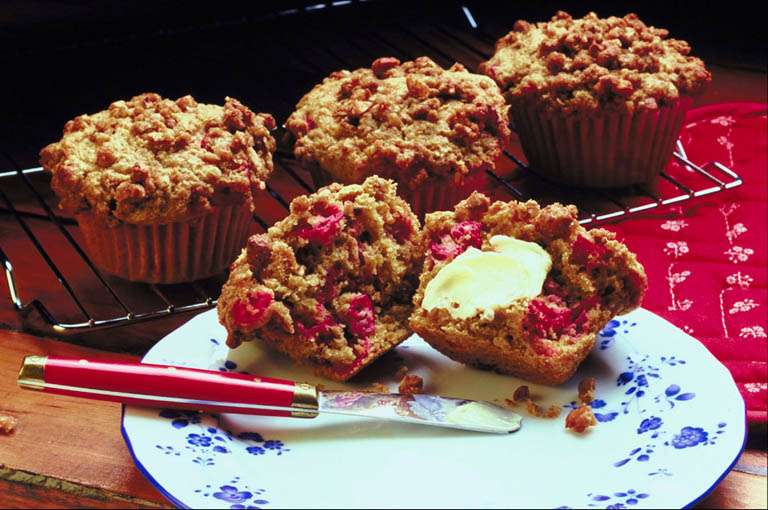
Whole cranberries can be used in place of other berries in muffins, breads, cereals and more.
Cranberries possess a unique ability to inhibit bacteria, including E. coli, from adhering to the urinary tract. This is why cranberry juice is often recommended to prevent urinary tract infections (UTIs). Cranberries also contain hippuric acid, which is antibacterial and helpful for warding off UTIs.
But cranberries' anti-adhering properties are helpful for much more than your urinary tract. A study published in the October 2004 issue of the Journal of Science, Food and Agriculture found that an antiviral compound in cranberries called proanthocyanidin A-1 inhibits the herpes virus from attaching to and penetrating the genitals.
Likewise, a compound in cranberries is known to keep Helicobacter pylori, the bacteria that causes most gastric ulcers, from adhering to the cells of the stomach lining...........
---------------------------------------------------------------------------------------------------------------------------
History and traditional uses
First Nations knew that cranberries could prevent or cure scurvy, a condition which we now understand is caused by Vitamin C deficiency, and taught this medicinal use to settlers. Some First Nations also used it for bladder and kidney problems.
Cranberries have also always been popular as a food. First Nations dried them and mixed them with fat and/or dried meat or fish to make a portable "trail mix". In the early 1800s, settlers in Massachusetts began to grow cranberry commercially, making it one of the first native North American medicinal plants to be cultivated as a cash crop......... read more about the Healing Powers of Plants
-----------------------------------------------------------------------------------------------------------------------------
-----------------------------------------------------------------------------------------------------------------------------