
 | ||||
|  | | ||
| ||||
This Topic has Related Categories:
_________________________________________________________________________
Irish Coffee
Ingredients:
1 C hot coffee
1 1/2 oz. Irish Mist liqueur
whipped cream for garnish
OR
Modern Version
1 C hot coffee
1 oz. Irish Whiskey
3 sugar cubes
whipped cream for garnish
Method: In order to make this recipe properly the whiskey has to be heated to a high temperature. Pour the coffee in a cup with the desired number of sugar cubes. Then use a spoon turned upside down and pour the HOT whiskey over it so it flows down gently. Top it all with the whipped cream. See photos below for the process.
When served, true Irish Coffee always has three distinct layers. When served, you first use a straw and sip (a very small amount as it is HOT) a little of the Whiskey. Then stir all the ingredients together.
________________________________________________________
Irish Brown Soda Bread
This turn-of-the-century traditional Irish bread uses baking soda instead of yeast for a foolproof recipe perfect for St. Paddie's Day. Rolled oats and sweet buttermilk enhance the flavors of this rustic bread.
4 cups whole wheat flour
1 cup bread flour
1/3 cup rolled oats
1 teaspoon baking soda
1 teaspoon salt
2 1/2 cups buttermilk
1. Preheat oven to 425 degrees F (220 degrees C). Lightly grease two baking sheets.
2. In a large bowl, stir together whole wheat flour, white flour, rolled oats, baking soda and salt. Gently mix in the buttermilk until a soft dough is formed. Knead very lightly. Divide dough into 4 pieces; form into rounded flat loaves. Mark each loaf with an 'X' and place on prepared baking sheets.
3. Bake in preheated oven until golden brown, about 30 to 45 minutes.
________________________________________________________
More Classic Irish Eats & Drinks
Irish Stews
Shepard's Pie
Corned Beef N Cabbage
Sweet Irish Soda Bread
Oatmeal Soda Bread
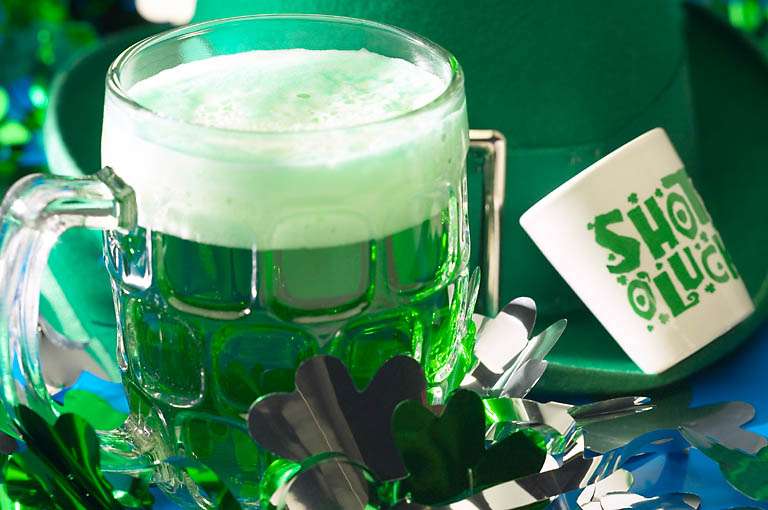
Green Beer
________________________________________________________

 |
 | ||||
|  | | ||
| ||||
 | ||||
| | | ||
| ||||
 | ||||
|  | | ||
| ||||
 |  | |||||
| |  | ||||
| |  | | |||
| | | ||||
| | |||||
| ||||||
| | |||||


Holiday Cookbooks
Saint Patrick's Day: March 17

Home / Site Info / Terms of Use / Games / Horoscope / Zodiac / E- Greetings / Calendar Store / Thank You! / Hot Links /

| ||||
| | | ||
| ||||
 | ||||
| | | ||
| ||||
| ||||
| | | ||
| ||||

| ||||
| | | ||
| ||||
| ||||
| | | ||
| ||||
| ||||
| | | ||
| ||||
| ||||
| | | ||
| ||||
| ||||
| | | ||
| ||||


Calendar /
 | ||||
| | | ||
| ||||
Follow us:


| ||||
| | | ||
| ||||
| ||||
| | | ||
| ||||
Saint Patrick's Day or the Feast of Saint Patrick (Irish: Lá Fhéile Pádraig, "the Day of the Festival of Patrick") is a cultural and religious holiday celebrated annually on 17 March, the death date of the most commonly-recognised patron saint of Ireland, Saint Patrick (c. AD 385–461).
HOT LINKS
References / Resources
Credits / External Links
| ||||
|  | | ||
| ||||

More help with Your Research
Resources:
See our resource page
Credits:
This article is distributed under the terms of GNU Free Documentation License.
Top Photo Credits:
| ||||
| | | ||
| ||||
| ||||
|  | | ||
| ||||

Trending Now


| ||||
| | | ||
| ||||
| ||||
| | | ||
| ||||
| ||||
| | | ||
| ||||
Categories:

| ||||
| | | ||
| ||||
| ||||
| | | ||
| ||||
| ||||
| | | ||
| ||||
| ||||
| | | ||
| ||||
| ||||
| | | ||
| ||||
| ||||
| | | ||
| ||||
- Christian festivals and holy days
- Festivals in Ireland
- Irish-American culture
- Irish culture
- Irish folklore
- Irish-Australian culture
- Saints days
- Parades
- Public holidays in Canada
- Public holidays in Mexico
- Public holidays in the Republic of Ireland
- Public holidays in the United States
- Fixed holidays

Gone-ta-pott.com
A place to discover Holidays
you didn't know existed!
|
.........................................................................................................................................................................
When is St. Patricks Day? -Saint Patrick's Day (Irish: Lá ’le Pádraig or Lá Fhéile Pádraig), colloquially St. Paddy's Day or Paddy's Day, is an annual feast day which celebrates Saint Patrick (circa 385–461 AD), one of the patron saints of Ireland, and is generally celebrated on March 17.
Who celebrates this holiday? -The day is the national holiday of Ireland. It is a bank holiday in Northern Ireland and a public holiday in the Republic of Ireland, Montserrat, and the Canadian province of Newfoundland and Labrador. In the rest of Canada, Great Britain, Australia, the United States and New Zealand, it is widely celebrated but is not an official holiday.
.........................................................................................................................................................................
When did it become a public holiday? -In the past, Saint Patrick's Day was celebrated only as a religious holiday. It became a public holiday in 1903, by the Bank Holiday (Ireland) Act 1903, an Act of the United Kingdom Parliament introduced by the Irish MP James O'Mara. O'Mara later introduced the law which required that pubs be closed on 17 March, a provision which was repealed only in the 1970s. The first St. Patrick's Day parade held in the Irish Free State was held in Dublin in 1931 and was reviewed by the then Minister of Defence Desmond Fitzgerald. Although secular celebrations now exist, the holiday remains a religious observance in Ireland, for both the Church of Ireland and Roman Catholic Church.
It was only in the mid-1990s that the Irish government began a campaign to use Saint Patrick's Day to showcase Ireland and its culture.
A Feast Day: -It became a feast day in the Roman Catholic Church due to the influence of the Waterford-born Franciscan scholar Luke Wadding in the early part of the 17th century, and is a holy day of obligation for Roman Catholics in Ireland. The feast day usually falls during Lent; if it falls on a Friday of Lent (unless it is Good Friday), the obligation to abstain from eating meat (usually corned beef) can be lifted by the local bishop. The date of the feast is occasionally, yet controversially, moved by church authorities when March 17 falls during Holy Week; this happened in 1940 when Saint Patrick's Day was observed on April 3 in order to avoid it coinciding with Palm Sunday, and happened again in 2008, having been observed on 15 March.] March 17 will not fall during Holy Week again until 2160.
.........................................................................................................................................................................
How is this holiday celebrated?
Saint Patrick's Day is celebrated worldwide by Irish people and increasingly by non-Irish people (usually in Australia and North America). Celebrations are generally themed around all things Irish and, by association, the colour green. Both Christians and non-Christians celebrate the secular version of the holiday by:
- In Ireland on St. Patrick’s Day, people traditionally wear a small bunch of shamrocks on their jackets or caps. Children wear orange, white and green badges, and women and girls wear green ribbons in their hair.
- wearing green or orange clothes,
- eating Irish food and/or green foods,
- Consumption of traditionally Irish alcoholic beverages (beer and stout, such as Murphy's, Beamish, Smithwicks, Harp, or Guinness; Irish whiskey; Irish coffee; or Baileys Irish Cream) - popular to drink green beer-
- attending parades.
Saint Patties Day Parade: -The St. Patrick's Day parade was first held in Boston in 1761, organized by the Charitable Irish Society. The first recorded parade was New York City's celebration which began on 18 March 1762 when Irish soldiers in the English military marched through the city with their music. The New York parade is the largest, typically drawing two million spectators and 150,000 marchers. The predominantly French-speaking Canadian city of Montreal, in the province of Québec has the longest continually running Saint Patrick's day parade in North America, since 1824; The city's flag has the Irish emblem, the shamrock, in one of its corners. Ireland's cities all hold their own parades and festivals, including Dublin, Cork, Belfast, Derry, Galway, Kilkenny, Limerick, and Waterford. Parades also take place in other Irish towns and villages. The St. Patrick's Day parade in Dublin, Ireland is part of a five-day festival; over 500,000 people attended the 2006 parade.
.........................................................................................................................................................................
Christian festival: -As well as being a celebration of Irish culture, Saint Patrick's Day is a Christian festival celebrated in the Catholic Church, the Church of Ireland, and some other denominations. The day almost always falls in the season of Lent. Some bishops will grant an indult, or release, from the Friday no-meat observance when St. Patrick's Day falls on a Friday; this is sometimes colloquially known as a "corned-beef indult". When 17 March falls on a Sunday, church calendars (though rarely secular ones) move Saint Patrick's Day to the following Monday—and when the 17th falls during Holy Week (very rarely), the observance will be moved to the next available date or, exceptionally, before holy week.The public holiday in Ireland does not move and always remains at 17 March, being fixed on the State calendar.
Irish for a Day: -In many parts of North America, Britain, and Australia, expatriate Irish and ever-growing crowds of people with no Irish connections but who may proclaim themselves "Irish for a day" also celebrate St. Patrick's Day, usually with the consumption of traditionally Irish alcoholic beverages (beer and stout, such as Murphy's, Beamish, Smithwicks, Harp, or Guinness; Irish whiskey; Irish coffee; or Baileys Irish Cream) and by wearing green-coloured clothing.
.........................................................................................................................................................................
Who was St. Patrick? (see Who was Saint Patrick? )
Saint Patrick was the missionary credited with converting the Irish to Christianity in the late 300�s A.D. His real name is believed to have been Maewyn Succat, but he changed it to Patrick after he became a priest. At the age of 16, while living in Ireland, he was kidnapped by pirates and sold into slavery....resource: read more
Historical sources report that Saint Patrick was not even Irish! He was born around 373 A.D. in either Scotland or in Roman Britain (the Romans left Britain in 410 A.D.).
March 17th, celebrated worldwide as St. Patrick’s Day marks the death of the patron saint of Ireland and the universal baptization of Ireland. This day commemorates the death of this great figure, which has many legends
The day named after the saint commonly hailed as St. Patrick is not the name he was born with but rather a name he was christened to. His actual name was Maewyn Succat who was kidnapped from the native land of Britain by a band of pirates and then sold into slavery in Ireland..... resource: read more
Did you know that St. Patrick spent six years of slavery in Ireland until he escaped and undertook religious training abroad? Click here to find out the details about this great man!
.........................................................................................................................................................................
St. Patties Day Fun Facts
- St. Patrick’s Day is a national holiday in Ireland, and a provincial holiday in the Canadian province of Newfoundland and Labrador.
- According to the Guinness Book of World Records, the highest number of leaves found on a clover is 14!
- One estimate suggests that there are about 10 000 regular three-leaf clovers for every lucky four-leaf clover.
- The name “lephrechaun” has several origins. It could be from the Irish Gaelic word “leipreachan,” which means “a kind of aqueous sprite.” Or, it could be from “leath bhrogan,” which means “shoemaker.”
- Legend says that each leaf of the clover means something: the first is for hope, the second for faith, the third for love and the fourth for luck.
- Also called Feast of Saint Patrick, (Saint) Paddy's Day, St Patty's Day
.........................................................................................................................................................................
Irish
Blessings
May you be in Heaven a half hour before the Devil knows you're dead!
May your neighbors respect you, Troubles neglect you,
The angels protect you,
And Heaven accept you.
Dance as if no one were watching, Sing as if no one were listening,
And live every day as if it were your last.
.........................................................................................................................................................................
What is a Claddagh?
The Claddagh is a heart being held by a pair of hands with a crown above. A symbol of love and friendship. The hands are friendship, the crown is loyalty, the heart is love.
.........................................................................................................................................................................
Irish Heritage
An estimated 70 million people world-wide can claim Irish heritage. This article attempts to provide some insight into Ireland's long and complex history.
The island or Ireland, some 89,000 sq. km (32,000 sq. mi.) is comprised of the Republic of Ireland (Eire) which occupies almost 85% of the total land-mass, and Northern Ireland which is part of the United Kingdom.
Within the traditional four ecclesiastical provinces of Ulster (north-east), Leinster (south-eastern Ireland including the ancient kingdom of Meath), Munster (south-west), and Connaught (or Connacht, north-west) there are 32 counties, 26 of which are within the Republic. The partition of the island dates from 1920-22, before which the whole island was under British rule..... read more
.........................................................................................................................................................................
See also:
- Plastic Paddy
External Links:
- Official St. Patrick's Festival in Dublin, Ireland
........................................................................................................................................................................
- The Wearing of the green (shamrock)
- Go Green!
 |  | |||||
|  |  | ||||
| |  | | |||
|  | | ||||
|
| ||||||
| | |||||
The Color for March is GREEN
Green is the national color of Ireland and is strongly associated with that country. Green also has close associations with Islam. Because of all the green in nature the color is reminiscent of Spring.
Green is life.
Abundant in nature, green signifies growth, renewal, health, and environment.
The Meaning of the Color Green - growth, health, environment, harmony.



Celebrating Saint Patrick's Day!
- The Wearing of the green (shamrock)


